
2nd AI Webinar: P2P with BDU and Anadach
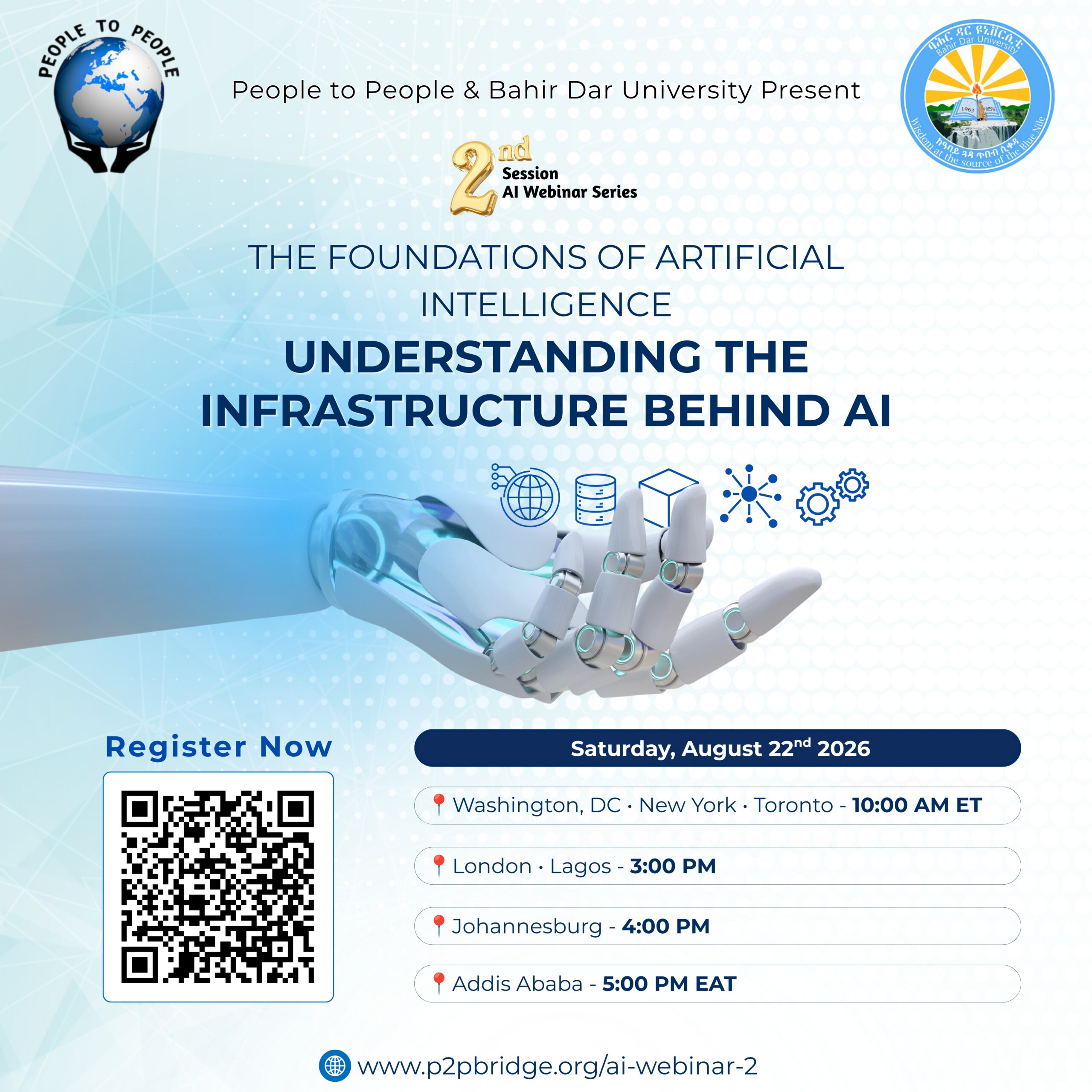
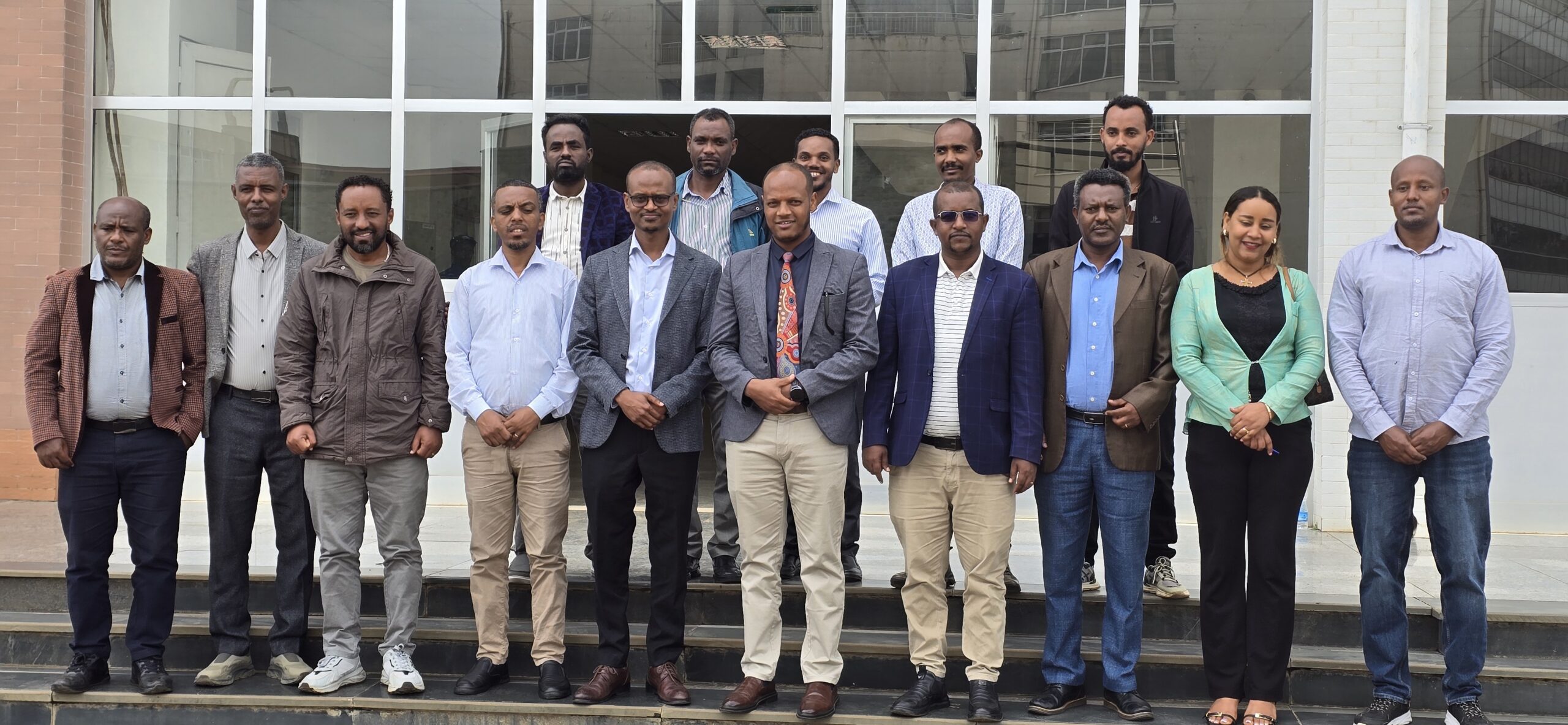
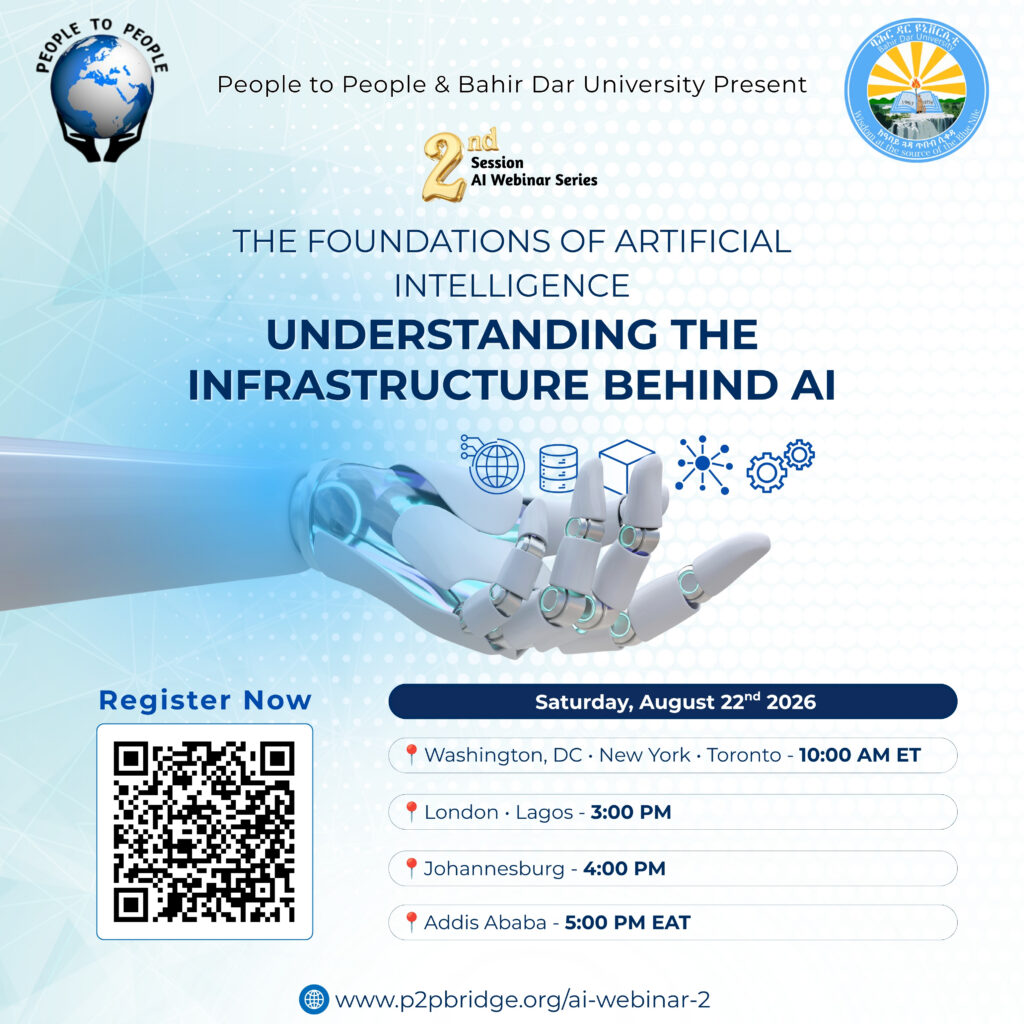
Thank You for Joining Our 2nd AI Webinar Session! Thank You for Joining Our 2nd AI Webinar Session! 🤖🌍 AI Webinar SeriesPeople to People • Bahir Dar University • Anadach Group The Foundations of Artificial IntelligenceUnderstanding the Infrastructure Behind AI Thank you to everyone who joined the second session of the AI Webinar Series, bringing together experts, educators, technology leaders, researchers, and participants from Ethiopia, Africa, the United States, Europe, and around the world. The session explored one of the most important questions in the development of artificial intelligence: What infrastructure makes AI possible, and how can Africa build the capacity to participate meaningfully in the AI revolution? Welcome Message A Message from Dr. Enawgaw Mehari, M.D. Good morning, good afternoon, and good evening to everyone joining us from Ethiopia, across Africa, the United States, Europe, and around the world. On behalf of People to People, Bahir Dar University, and Anadach Group, and with the support of ARIFPay and ARTS Media, it is my great pleasure to welcome you to the second session of our AI Webinar Series: “The Foundations of Artificial Intelligence: Understanding the Infrastructure Behind AI.” Artificial intelligence is one of the most consequential technological transformations of our generation. It is already reshaping healthcare, education, agriculture, finance, media, scientific research, industry, and government. But AI does not exist in the cloud by magic. Behind every AI application is real infrastructure—hardware, software, connectivity, data centers, power, and big data. These are the Six Pillars that provide the foundation for our discussion. For Africa, the question is no longer whether AI will affect our future. It will. The more important question is whether Africa will simply become a consumer of AI technologies developed elsewhere, or whether we will build the infrastructure, human capital, data, research capacity, and partnerships necessary to create, adapt, and govern AI for our own needs. Ethiopia as a Case in Point Ethiopia has tremendous opportunities—a young population, expanding universities, extraordinary linguistic and cultural diversity, growing technological capacity, and significant renewable-energy potential. At the same time, we face challenges in computing capacity, connectivity, data infrastructure, and human capital. This raises an important question: How should African universities transform their curricula, research, faculty development, and industry partnerships to prepare students for an AI-driven economy, while balancing access to global cloud platforms with investment in local and regional cloud, data, and computing capacity? Ultimately, technology must serve people. Can AI help a farmer improve productivity? Can it extend healthcare expertise to underserved communities? Can it improve education and financial inclusion, accelerate scientific discovery, and strengthen public services? And importantly, how do we develop AI that understands our languages, our data, our cultures, and our priorities? As we innovate, we must also address privacy, cybersecurity, misinformation, bias, employment, energy consumption, and responsible governance. Innovation and responsibility must move together. Our Moderator and Distinguished Panelists We were privileged to have an outstanding group of experts and leaders contributing to this important conversation. Dr. Berhanu Alemayehu, DrPH — Moderator Dr. Berhanu Alemayehu is a distinguished health economist, applied statistician, and educator with more than 20 years of experience in health economics, outcomes research, and advanced analytics. He brings extensive experience at the intersection of healthcare, data, and technology, including the design and implementation of electronic medical record systems. He currently chairs the AI Initiative at Bahir Dar University, helping lead efforts to build institutional capacity and advance the practical and responsible application of artificial intelligence. His combination of advanced analytics, healthcare expertise, technology experience, academic leadership, and commitment to Ethiopia made him ideally suited to moderate this discussion. Professor Chike Nzerue Professor Chike Nzerue is Chair of the Department of Internal Medicine at Meharry Medical College in Nashville, Tennessee. In addition to his distinguished career in medicine and academic leadership, Professor Nzerue has pursued additional training at Harvard in artificial intelligence, bringing an important perspective to the intersection of medicine, education, leadership, and AI. Mr. Adam Rubin Mr. Adam Rubin is Oxford-trained and deeply passionate about artificial intelligence, emerging technologies, and their potential to transform society. He is Co-Founder of Zantango Inc., a U.S.-based technology company, and Co-Developer of Gweha Health, a next-generation digital health platform designed to strengthen national health systems across Africa and the developing world. His combination of technology, entrepreneurship, and digital-health innovation brought an important global and practical perspective to the conversation. Dr. Getaw Baye and Dr. Tewodros Kifleyohanes We were also delighted to welcome Dr. Getaw Baye and Dr. Tewodros Kifleyohanes, who contributed valuable expertise and perspectives to this important discussion. The Six Pillars That Make AI Possible The session began with presentations focused on the foundational infrastructure required to develop and deploy artificial intelligence. Lydia Alem and Rachel Dungan helped establish the technical foundation for the discussion by exploring the Six Pillars That Make AI Possible. Rachel Dungan is a rising voice in the AI ecosystem, bringing fresh energy, insight, and a forward-looking perspective to this rapidly evolving field. Together, Lydia and Rachel helped participants understand the infrastructure behind AI before the program moved into the broader panel conversation on the opportunities and challenges of implementing AI at scale. From Ideas to Implementation Dr. Bekalu Wubshet We were also pleased to recognize Dr. Bekalu Wubshet, CEO of the College of Medicine and Health Sciences at Bahir Dar University. Dr. Bekalu is an extraordinary and forward-looking leader committed to positioning Bahir Dar University at the forefront of Ethiopia’s emerging AI ecosystem. Under his leadership, Bahir Dar University is moving beyond discussion toward implementation, including the signing of an MoU with ARIFPay to collaborate on the development of an electronic medical record system. This represents the kind of partnership needed to move from ideas to implementation and measurable impact: Academia + Technology + Private Sector = Innovation with Impact Dr. Bekalu concluded the program with closing remarks, key takeaways, and strategic direction for the road ahead. A Final Thought Africa should not be a spectator in the AI revolution. We should not simply ask: “How can Africa
2nd AI Webinar: P2P with BDU and Anadach Read More »